Zen Tiles - Mahjong Match
- 4.8
- Rating
- 1.00M
- Installs
- Free
- Price

 Analysis by App-foxy
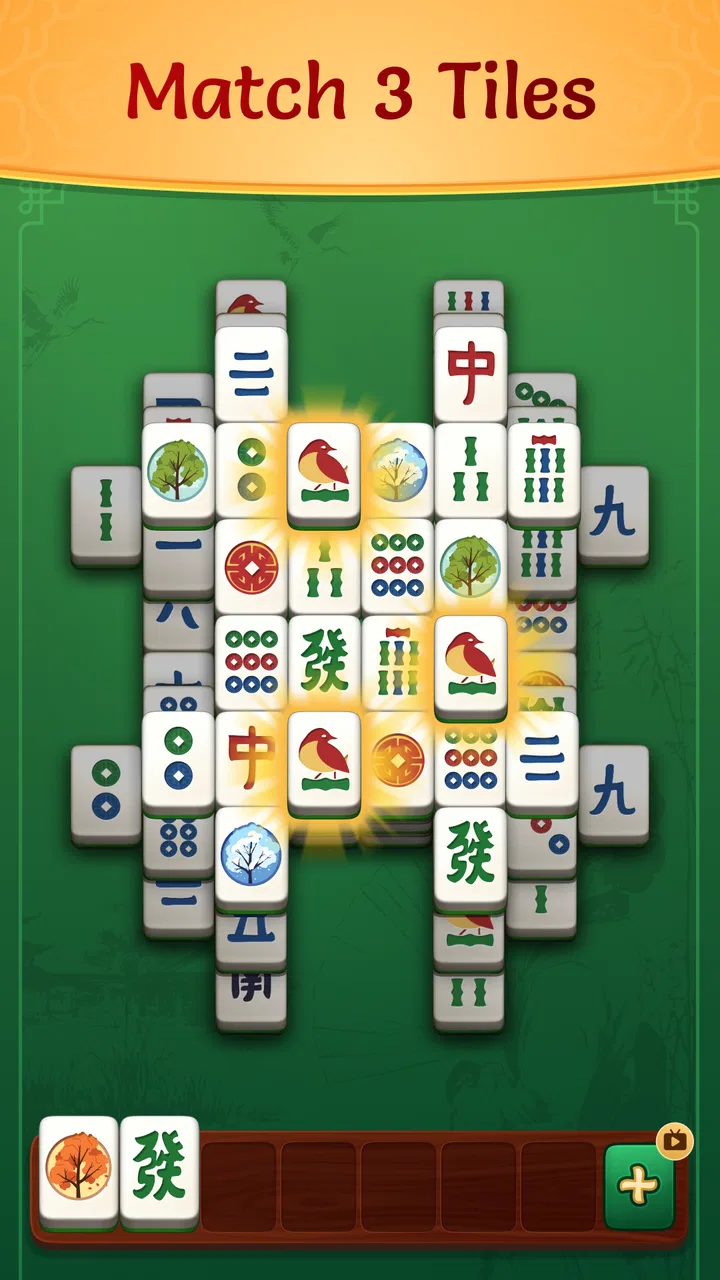
I found Zen Tiles - Mahjong Match most appealing when I wanted a quiet puzzle that could be played in short bursts rather than a game demanding a long, uninterrupted session. It is a free tile-matching game from Bluetile, built around arranging your attention, spotting groups, and making calm decisions. The presentation aims for a relaxed mood, but the real test is whether the board stays readable and manageable when your concentration, eyesight, hearing, or available hand movement is not perfect.
That question matters because puzzle games are often described as universally easy when they are only easy under ideal conditions. In my experience, Zen Tiles is approachable for many players, yet its comfort depends on how clearly you can distinguish the tiles and how precisely you can tap them. I would recommend it to someone who enjoys mahjong-style matching without the pressure of a timer-heavy arcade game, while I would be more cautious about recommending it to anyone who needs large controls, strong contrast, or extensive accessibility settings.
How the board feels to read and navigate
The central idea is straightforward: identify matching tile groups and clear them from the board. That simplicity gives the game a gentle learning curve. I did not need a complicated rulebook to understand what I was supposed to do, and the visual arrangement naturally encouraged me to scan from the edges toward the more crowded areas. For a casual puzzle, that is a strong starting point because the challenge comes from observation and planning rather than from learning a large collection of commands.
You May Also Like

 Blood Strike: 2.5 Anniversary
Blood Strike’s Loadouts Turn Every Drop Into a Tactical Gamble
A close look at Blood Strike’s custom loadouts: how fast access to signature weapons reshapes its battle royale rhythm, rewards preparation, and narrows the gap between fights.

 Pandora - Music & Podcasts
Pandora’s Music Is Easy to Start, but Harder to Recover
Pandora’s strength is its low-effort path from a seed to a station. Its weak spot is how much confidence it asks you to place in connection, setup, and quiet recovery.

 8 Ball Pool
 Is Built on Rivalries, Rematches, and Routine
A close look at the rivalries, rematches, shared routines, and unanswered safety questions that turn a quick pool match into a persistent mobile community.

 Samsung Music
’s Quiet Strength Is Playing What You Already Own
Its reach comes less from spectacle than from dependable access to a personal library. That simplicity is both the app’s strongest retention engine and its ceiling.

 AccuWeather: Weather Radar
AccuWeather Review: A Quick, Clear Forecast for Everyday Decisions
For everyday plans, the best forecast is the one you can understand quickly. AccuWeather makes rain timing, radar, and local conditions easy to act on, with a few trade-offs.

 Hill Climb Racing
Why Hill Climb Racing Still Turns Crashes Into One More Run
A tiny car, a bumpy hill and one more upgrade: Hill Climb Racing keeps resurfacing because its simple chaos makes every near-miss feel personal.
More From Our News Desk



The mahjong-inspired artwork gives each move a visual identity, which is important in a game where recognition is the main task. I found myself using two passes through a board: first looking for obvious matches, then checking the remaining tiles before committing to a move. That habit is more useful here than tapping quickly. It also makes the game feel less like a reflex test and more like a small visual sorting exercise.
Navigation is similarly uncomplicated. The experience is centered on the puzzle itself, so a player who prefers a clean route from opening the game to starting a board should feel comfortable. I appreciate that kind of directness on a phone, especially when I am playing during a short break and do not want to work through several layers of menus before reaching the actual challenge.
Still, visual simplicity is not the same as perfect readability. Tile designs can become harder to separate when several pieces sit close together or when the screen is small. I recommend holding the phone at a comfortable distance and avoiding a dim display if you are relying on fine visual differences. A larger screen can make a meaningful difference, not because the rules change, but because it gives the symbols and spaces more room to breathe.
One useful approach is to resist scanning the whole board at once. I get better results by dividing it mentally into corners, edges, and center clusters. This reduces the amount of visual information I have to process at one time. It is a simple technique, but it makes the game less tiring for me and helps prevent the common mistake of overlooking a possible match in a crowded section.
The game’s popularity also suggests that its basic presentation works for a broad casual audience. It has an average rating of 4.8 from around 135 thousand ratings, and it has passed one million installs. Those figures do not prove that every player will find the visuals comfortable, but they do indicate that the core concept and general presentation have connected with many people.
Readable for beginners, less forgiving for low vision
I would put Zen Tiles in the easy-to-understand category, but not automatically in the easy-to-see category. Someone new to tile matching can grasp the objective quickly, while someone with reduced vision may need more care to identify small symbols or distinguish similar-looking pieces. The game can therefore be welcoming at the rules level while still presenting a visual barrier at the board level.
This distinction is important for parents choosing a game for a child, older players, or anyone who becomes tired when focusing on compact details. The age rating is Everyone, which fits the calm, nonviolent puzzle format, but an Everyone rating does not mean every visual need is covered. I would try a few boards before deciding whether it is comfortable for a particular player.
The game is also better suited to people who enjoy visual pattern recognition than to players who need spoken guidance or text-heavy instructions. If you prefer puzzles that explain every step through audio, large labels, or highly explicit prompts, a different title may serve you better. Zen Tiles communicates primarily through the board, the tile art, and the act of matching.
Motor demands and sensory comfort
From a motor perspective, the game asks for repeated taps and reasonably accurate selection. That is less demanding than a fast action game, but it is not completely hands-off. If your fingers shake, your touch precision is limited, or you usually play with one hand while moving around, selecting a small tile can become frustrating. The slower puzzle rhythm helps, yet it does not remove the need to place each tap carefully.
I found that playing with both hands made the board easier to manage. One hand could stabilize the phone while the other selected tiles, which reduced accidental movement and made longer sessions more comfortable. On a table, the same arrangement can help people who find it tiring to hold a device continuously. This is a practical adjustment rather than a feature of the game, but it changes how accessible the experience feels.
Players with limited reach may also prefer a larger phone or tablet if the board spreads important choices across the screen. Reaching across a wide display can be less comfortable than using a smaller device, while a very small screen can make the tiles harder to read. The best choice depends on whether your main difficulty is reaching or recognizing detail.
For sensory comfort, the game’s zen-like direction is a positive fit for people who want a calmer alternative to noisy, rapidly changing puzzle games. I would choose it when I wanted to settle my attention rather than increase stimulation. That said, calm presentation should not be confused with complete sensory control. If you are sensitive to particular visual effects or changes on screen, it is worth testing the game personally and adjusting the device’s general display settings to your comfort.
Sound is not the reason I would choose this game. The essential information is visual, so a player who prefers to play with the device muted can still focus on the puzzle’s main task. This is useful in quiet public places, shared rooms, or situations where headphones are inconvenient. It also means that someone who depends on audio cues may have less support than they would in a more sound-led game.
A practical strategy for reducing fatigue is to treat each board as a short concentration exercise rather than an endless session. I like stopping after a natural completion point, especially if I notice myself leaning closer to the screen or making careless taps. The game is well suited to breaks, but that does not mean every player will find extended play comfortable.
Why the slower pace helps, and where it stops helping
The absence of frantic decision-making is one of the strongest inclusive qualities here. I can look, reconsider, and choose a tile without feeling that a split-second reaction is the whole point. That benefits players who process visual information more slowly or who simply prefer deliberate play. It also makes the game a reasonable option for winding down after work or filling a few quiet minutes.
However, a relaxed pace cannot compensate for every physical limitation. If tapping small targets is difficult, the game may still demand more precision than you want. Likewise, if visual symbols are hard to distinguish, extra thinking time only gives you more time to inspect a board that remains difficult to read. In those cases, a puzzle with larger controls, stronger contrast options, or alternative input methods would be a better choice.
Playing in real everyday situations
Zen Tiles fits naturally into short, interrupted moments. I can imagine opening it while waiting for an appointment, taking a quiet break between tasks, or sitting on a train with a few minutes to spare. Because the game is based on individual boards rather than a continuous story, it does not punish me for treating it as a small activity. That makes it more practical than a narrative game that expects me to remember a plot or return at a precise point.
It also works well for players who want a low-pressure mental routine. A person might use a board as a way to shift attention away from work, practice visual scanning, or keep the mind occupied without reaching for a competitive game. I would not describe it as a replacement for formal cognitive training, but it can serve as a pleasant everyday puzzle habit.
For families, the Everyone rating makes the premise easy to share across age groups. An adult can explain the matching goal quickly, and a child can learn by watching a few moves. The main consideration is whether the individual player can comfortably see and tap the tiles. A younger player may understand the puzzle but still need a larger device or occasional help with crowded arrangements.
It is less suitable when you need a game that can be played entirely through sound, when you want a strong competitive system, or when you expect deep strategic variety from every session. Its appeal is the focused act of matching, not a broad collection of modes or a complex social experience. Players who usually choose action puzzles, word games, or elaborate strategy titles may find the format too narrow.
The free entry point is helpful for trying the experience without committing money. Optional in-app purchases range from $0.99 to $2.99 per item, so I would check the purchase prompts carefully if a child will be using the device or if you prefer a completely uninterrupted free experience. The game can be approached as a free download, but the presence of optional purchases is still part of the decision for budget-conscious players.
How it compares with other puzzle choices
Compared with traditional mahjong solitaire, Zen Tiles feels more focused on matching groups of tiles than on reproducing the exact structure of a physical mahjong set. That makes it easier to pick up, but players who enjoy the stricter layers and long-term planning of classic solitaire layouts may find it less demanding. I would choose this game for a lighter, more immediately readable session and a traditional alternative for a more formal study of exposed-tile strategy.
Compared with match-three games, it trades bright chain reactions and rapid cascades for slower visual inspection. That is a meaningful difference for sensory comfort. If you enjoy the satisfaction of building combos under pressure, another match-three title may feel more energetic. If you prefer to examine a board and make one considered choice at a time, Zen Tiles is the calmer fit.
Compared with word puzzles, it asks less from language and more from visual recognition. That can be useful for players who do not want vocabulary to determine whether they succeed. On the other hand, anyone with difficulty distinguishing small symbols may find a well-designed word game with adjustable text easier to read. The better option depends less on which genre is “easier” and more on which kind of information you process comfortably.
One trade-off I noticed is that the game’s peaceful identity can make mistakes feel less dramatic, which is good for relaxed play but may reduce motivation for players who need strong goals or visible competition. I enjoyed it most when I set my own purpose: complete a board carefully, avoid impulsive taps, and stop before concentration turned into strain.
Remaining barriers before you download
The biggest barrier is the reliance on visual tile recognition. Players with low vision, color-vision differences, or difficulty distinguishing decorative symbols should not assume that a calm design automatically means an accessible one. I would test the game on the device you actually plan to use, because screen size, brightness, and viewing distance can change the experience substantially.
Motor precision is the second concern. The game is gentler than a fast-paced arcade puzzle, but it still expects deliberate taps on individual tiles. People with tremors or limited finger control may need to rest the phone on a stable surface. If that workaround is still uncomfortable, a game designed around larger targets or alternative controls would be more appropriate.
There is also a context barrier: the game is not ideal when you are walking, multitasking, or frequently interrupted during a single decision. Even though a board can fit into a short break, the matching task still benefits from focused attention. I would avoid playing while crossing streets, handling equipment, or doing anything that requires awareness away from the screen.
Device compatibility is fairly broad, with support beginning at Android 7.0, and the current version is 2.6.1. That makes it a realistic option for people who do not use the newest phone, although the comfort of the board will still depend on the display and touch response of the particular device. Compatibility gets you into the game; it does not guarantee that the visual layout will suit every player.
Finally, players who dislike optional purchases should decide in advance how they want to approach the game. Since the download is free but individual in-app items cost between $0.99 and $2.99, setting purchase restrictions on a shared device can prevent surprises. This is especially sensible when children can access the game, even though the content itself is rated Everyone.
My inclusive verdict
I see Zen Tiles as a thoughtful choice for people who want a quiet, visually focused matching game that can fit into ordinary breaks. Its strongest inclusive quality is the unhurried puzzle rhythm: I can inspect the board, plan a move, and continue without the pressure found in many faster mobile games. The simple objective also makes it approachable for beginners and easy to explain to another player.
At the same time, I would not call it universally accessible. The experience depends heavily on seeing small tile details and tapping them accurately. Players who need spoken information, large controls, high-contrast presentation, or alternative input should investigate those needs before settling on it. A larger screen and a stable playing position can improve comfort, but they cannot replace dedicated accessibility options.
For me, the best use is a short, calm session when I want to exercise visual attention without committing to a complicated game. I would recommend it to casual puzzle fans, families looking for an Everyone-rated activity, and players who prefer mahjong-inspired matching over noisy competition. I would steer someone toward another option if their priority is deep solitaire strategy, word-based play, audio-first access, or highly adjustable controls.
Bluetile has kept the idea easy to understand, and the strong reception from over one hundred thousand ratings reflects how well that basic appeal works for many players. My recommendation is therefore positive but practical: try it on your usual device, check whether the tiles remain comfortable to distinguish, and play in a stable setting. Zen Tiles is at its best when calm pacing and clear visual thinking are exactly what you need.
FAQs for Zen Tiles - Mahjong Match
01What is Zen Tiles - Mahjong Match?
Zen Tiles - Mahjong Match is a relaxing puzzle game that combines the classic elements of Mahjong with a modern twist. Players can enjoy beautifully designed tile sets and calming music as they match pairs of tiles to clear the board, offering a soothing gameplay experience.
02Is Zen Tiles - Mahjong Match free to play?
Yes, Zen Tiles - Mahjong Match is free to download and play. However, it may contain in-app purchases and ads that can enhance gameplay or provide additional features. These purchases are optional, allowing users to enjoy the game without spending money.
03What are the main features of Zen Tiles - Mahjong Match?
Zen Tiles - Mahjong Match features a variety of tile sets and backgrounds, daily challenges, and a hint system to assist players. The game also offers a progression system with levels of increasing difficulty, ensuring both beginners and experienced players can find a suitable challenge.
04Can I play Zen Tiles - Mahjong Match offline?
Yes, Zen Tiles - Mahjong Match can be played offline, making it an excellent choice for those who wish to enjoy the game without an internet connection. However, some features, like daily challenges or updates, may require an online connection.
05Is Zen Tiles - Mahjong Match suitable for all ages?
Zen Tiles - Mahjong Match is designed to be suitable for players of all ages. The intuitive gameplay, combined with its calming music and visuals, makes it an appealing option for both younger players and adults seeking a relaxing gaming experience.
Pros
- Intuitive and easy-to-navigate interface.
- Variety of challenging levels available.
- Soothing background music enhances focus.
- Offline play mode for uninterrupted gaming.
- Regular updates with new tile designs.
Cons
- In-app purchases can be pricey.
- Ads may interrupt gameplay frequently.
- Limited customization options for tiles.
- Requires a strong initial internet connection.
- Some levels may feel repetitive.

Zen Tiles - Mahjong Match
Gallery